

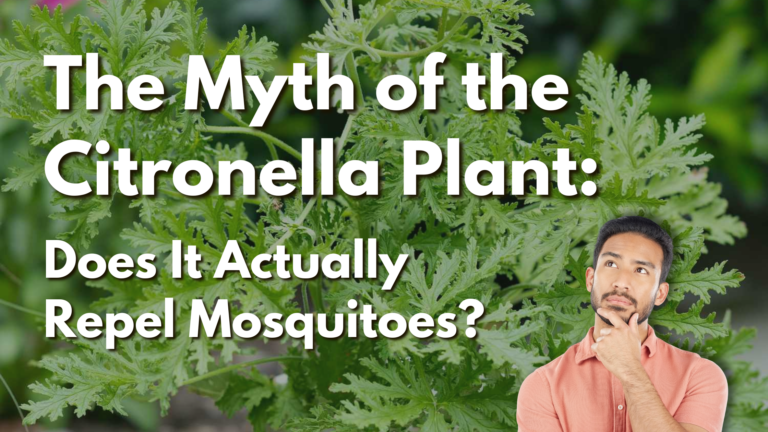
Many gardeners plant a so-called “citronella plant” in their garden, expecting it to keep mosquitoes out of their yard. This belief is widespread and wrong. While citronella oil can repel mosquitoes when properly formulated and applied, the citronella plant itself does not provide meaningful mosquito control in a garden setting.
What the Citronella Plant Really Is
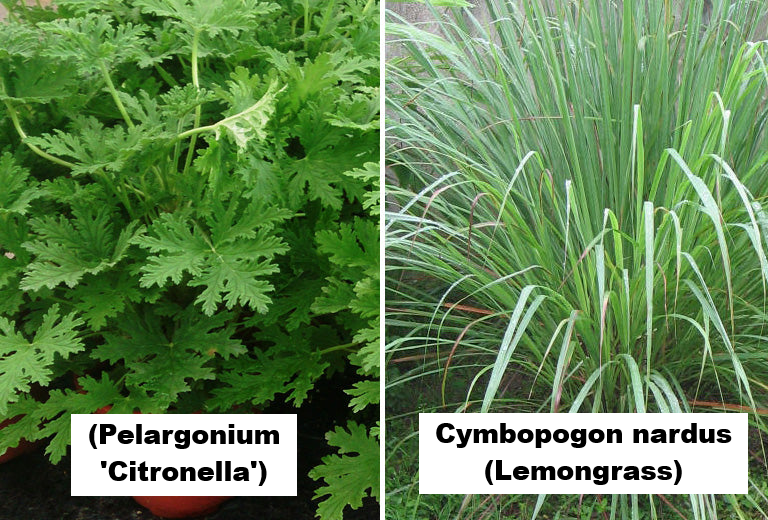
The plant commonly sold as a “citronella plant” is usually Pelargonium citrosum, a scented geranium. Its leaves release a lemon-like fragrance when crushed, which resembles the smell of citronella oil. However, the plant does not emit citronella oil into the air at levels high enough to repel mosquitoes. Simply planting it in the ground or placing it on a patio does nothing to reduce mosquito populations.
True citronella (Cymbopogon nardus) looks more like lemongrass, not the parsley-leafed geranium often sold. Its oils are used in repellent candles and sprays, but the plant itself offers little passive protection. The oil in the leaves must be extracted in order for it to be effective.
Why the Myth Persists
Citronella oil has been shown to repel mosquitoes when used in candles, sprays, or topical products. The leap from citronella oil to citronella plants is where the misinformation starts. In controlled products, the oil is concentrated and actively released. In a live plant, the scent is weak, localized, and quickly dissipates outdoors. Unless you crush the leaves and rub them directly on your skin, which is not recommended, the plant offers no real protection.
What Actually Works to Reduce Mosquitoes:
1. Eliminate Standing Water
Mosquitoes breed in stagnant water. Buckets, clogged gutters, birdbaths, and saucers under pots are prime breeding sites. Removing or refreshing standing water every few days is the most effective long-term control.
2. Use Fans and Air Movement
Mosquitoes are weak fliers. A simple box or oscillating fan on a patio can dramatically reduce mosquito activity in seating areas.
3. Apply Proven Repellents
Topical and area repellents containing DEET, picaridin, oil of lemon eucalyptus, or IR3535 are supported by research and provide reliable protection when used as directed.
4. Treat Water With Biological Controls
For water features that cannot be drained, mosquito dunks or bits containing Bacillus thuringiensis israelensis (BTI) kill mosquito larvae without harming people, pets, birds, or pollinators.
5. Use Outdoor Repellent Products Correctly
Citronella candles, coils, and torches can offer limited protection in small, still areas when used properly, but they are supplemental tools, not standalone solutions.

Plants Alone Are Not the Answer
No plant, including citronella, lavender, mint, or marigolds, will repel mosquitoes across a yard. Relying on plants alone leads to disappointment and continued mosquito pressure. Effective control requires addressing breeding sites and using products designed for insect control.
For reliable mosquito protection indoors and outdoors, visit Herbein’s Garden Center in Emmaus, PA. They carry a range of proven insect repellents and control products to help you enjoy your home and garden without relying on ineffective myths.


