

Potatoes are one of the most productive and forgiving crops for home gardeners, but confusion often starts with one simple distinction: determinate vs. indeterminate varieties. Understanding how each type grows directly affects how you plant, care for, and harvest your potatoes. Getting these factors right will lead to higher yield and less frustration.
Determinate Potatoes Explained:
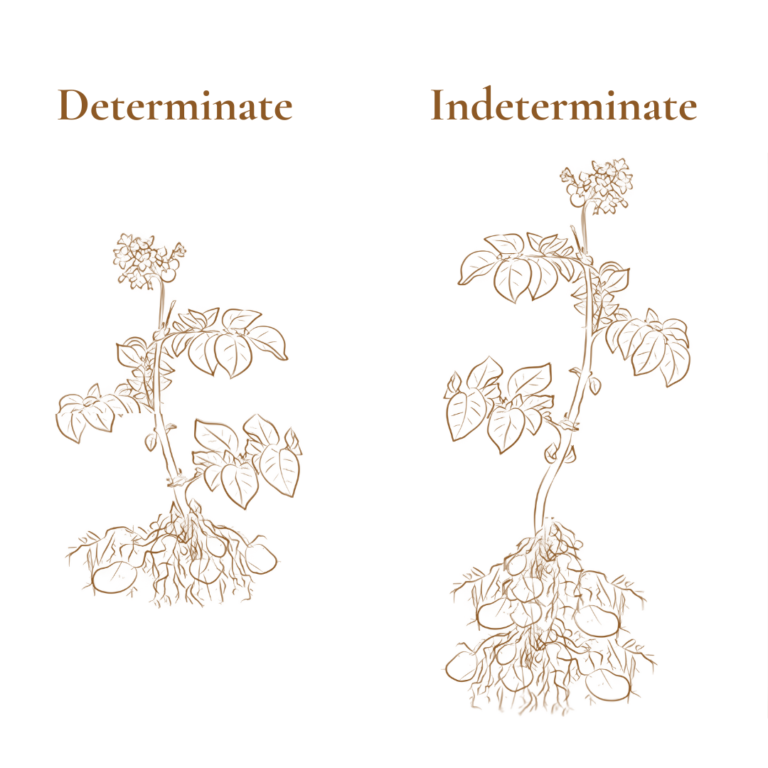
Determinate potatoes produce most of their tubers in a single layer near the seed potato. Once the plant reaches maturity, tuber production stops. Many early and mid-season varieties fall into this category. Because the tubers form in one zone, piling soil higher around the stems does not increase yield. Determinate potatoes are well suited for shallow beds, containers, and gardeners who want a predictable harvest.
Indeterminate Potatoes Explained:
Indeterminate potatoes form tubers along the buried stem as the plant grows upward. This growth habit allows for multiple layers of potatoes when soil is added over time. Many late-season varieties are indeterminate and benefit from deeper planting or repeated hilling. When managed correctly, these potatoes can produce a significantly larger harvest in the same footprint.
Planting Determinate Potatoes
Plant determinate seed potatoes about 3-4 inches deep with the eyes facing up. Space them 12” apart in rows set 30-36 inches apart. Cover with soil and water thoroughly. Once the plants emerge, light hilling is sufficient, mainly to protect developing tubers from sunlight and prevent greening. Additional hilling beyond that provides little benefit for yield.
Planting Indeterminate Potatoes
Indeterminate potatoes should be planted deeper or in trenches, typically 6-8 inches deep. As the plants grow, continue hilling soil or compost around the stems, leaving only the top few inches of foliage exposed. This process encourages additional tuber formation along the stem. Continue hilling until the mound reaches 10 to 12 inches high.
Watering and General Care
Both types of potatoes require consistent moisture, especially during flowering and tuber development. Uneven watering can cause misshapen tubers or internal defects. Avoid over-fertilizing with nitrogen, which promotes excessive foliage at the expense of tuber production. Well-drained soil and full sun are essential for both determinate and indeterminate varieties.
How and When to Harvest
Determinate potatoes: once the plants flower and begin to yellow. For new potatoes, harvest earlier while the skins are thin.
Indeterminate potatoes: later, after the foliage has died back completely. Waiting allows the skins to toughen, improving storage life.
Gently dig to avoid damaging tubers, and allow harvested potatoes to cure in a cool, dark place before long-term storage.

Choosing the Right Type for Your Garden
Determinate potatoes are ideal for gardeners with limited space or those growing in containers. Indeterminate potatoes reward gardeners willing to hill regularly with larger harvests. Success depends on matching the variety to your gardening style and space.
For the best selection of quality seed potatoes, visit Herbein’s Garden Center in the spring. They offer a variety of starter potatoes and knowledgeable guidance to help DIY gardeners get their potato season off to a strong start.


