

Hydrangeas are a signature shrub in Lehigh Valley landscapes: generous blooms, relatively low maintenance, and varieties suited to nearly every spot from morning-sun beds to shadier foundation plantings.
Pruning them correctly matters because different hydrangea types flower on different wood. Prune the wrong stems at the wrong time and you risk removing next year’s blooms.
This guide will explain the two main schools of thought, give step-by-step instructions for the most common types you’ll see in Zone 6a, and conclude with a practical recommendation for homeowners in the Lehigh Valley.
The Two Main Schools of Thought
* Prune by plant type (best practice).
Identify the hydrangea species, then use the pruning schedule that matches its flowering wood. This preserves blooms, maintains plant structure, and reduces risk of winter dieback.
*Prune aggressively on a fixed schedule (rejuvenation/renovation approach).
Cut back hard in late winter to renew older plants or to reshape an overcrowded bed. This works well for hydrangeas that bloom on new wood, but it will remove flowers from varieties that bloom on old wood. Use this only when you know the species or when replacing plants is acceptable.
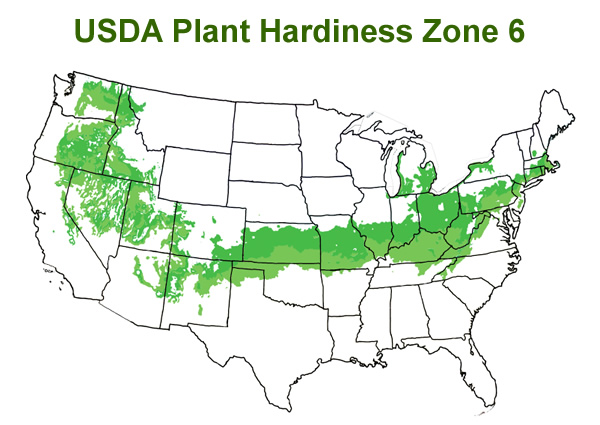
For reliable results in Zone 6a, the plant-type approach is the correct default. When in doubt, follow identification rules below, then prune accordingly.
Identify the Common Hydrangea Types:
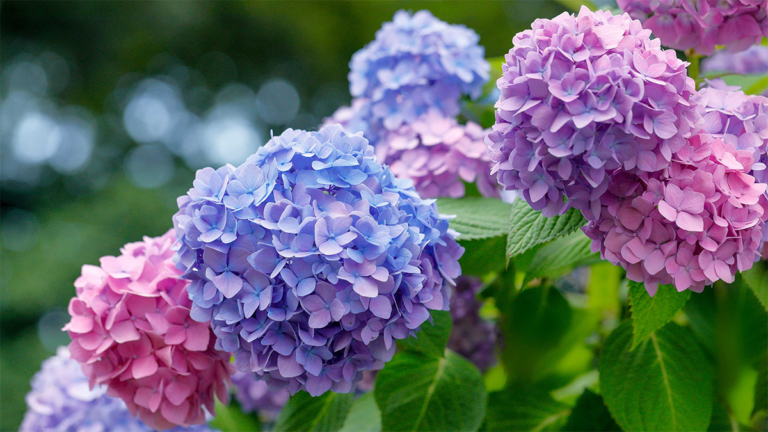
*Bigleaf: Hydrangea macrophylla (mophead and lacecap) — large rounded or flat flower heads; blooms form on old wood. Common in local gardens.
*Panicle: Hydrangea paniculata — conical flower panicles, often white turning pink; blooms on new wood.
*Smooth: Hydrangea arborescens (for example, ‘Annabelle’) — big rounded heads; vigorous stems; blooms on new wood.
*Oakleaf: Hydrangea quercifolia — distinctive oaklike leaves, good fall color; blooms on old wood.
If you cannot confidently ID the plant, treat it conservatively as an old-wood bloomer and avoid severe winter pruning.
Lehigh Valley (Zone 6a) Timing Calendar
*Late winter (Feb–Mar, before bud swell): Prune panicle and smooth hydrangeas (new-wood types).
*Immediately after flowering (June–July): Prune bigleaf and oakleaf hydrangeas (old-wood types). Remove spent blooms and do light shaping then.
*Anytime for dead or diseased wood: Remove as you see it; sanitize tools between cuts if disease is suspected.
Step-by-Step Pruning Instructions by Type
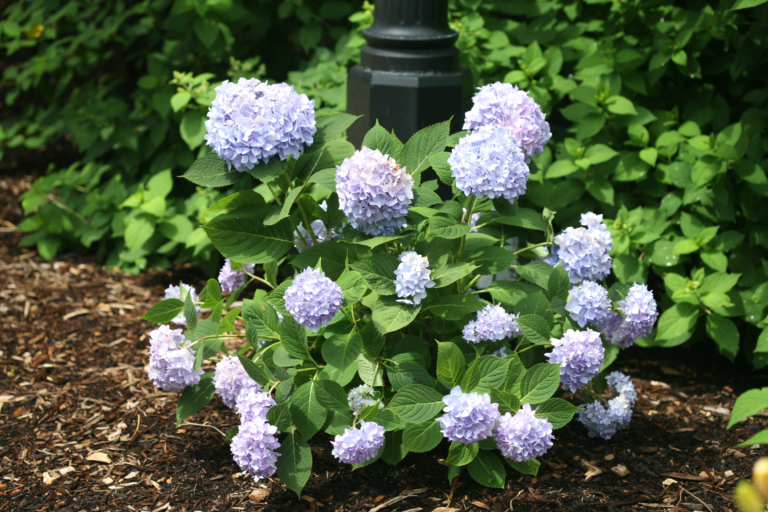
Bigleaf hydrangeas (H. macrophylla — mophead & lacecap) — blooms on old wood
1. Wait until immediately after flowering — typically mid to late June through July for local microclimates.
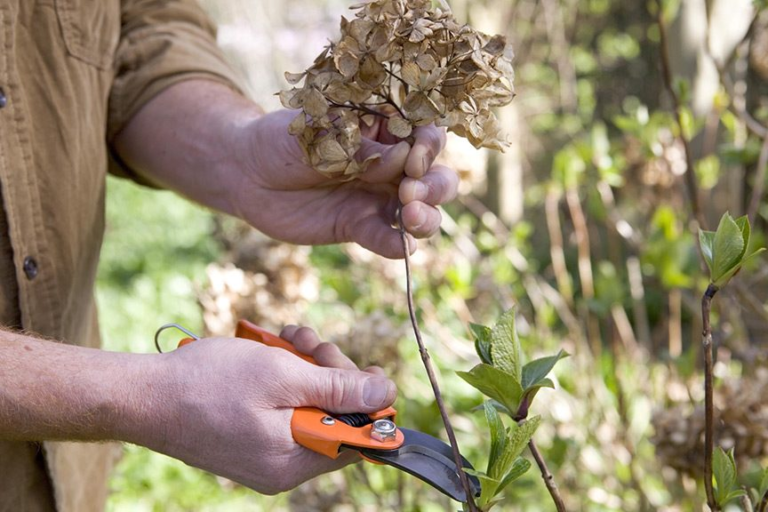
2. Remove spent flower heads (deadhead) by cutting just above the first pair of healthy buds below the bloom.
3. Remove only weak, crossing, or dead branches. Make selective cuts to open the center for air and light.
4. For more size control, you may shorten a few canes by up to one-third, but avoid cutting all canes back hard in winter.
5. Leave some spent flowers on older plants in fall if you want winter interest and snow protection.
Panicle hydrangeas (H. paniculata) — blooms on new wood
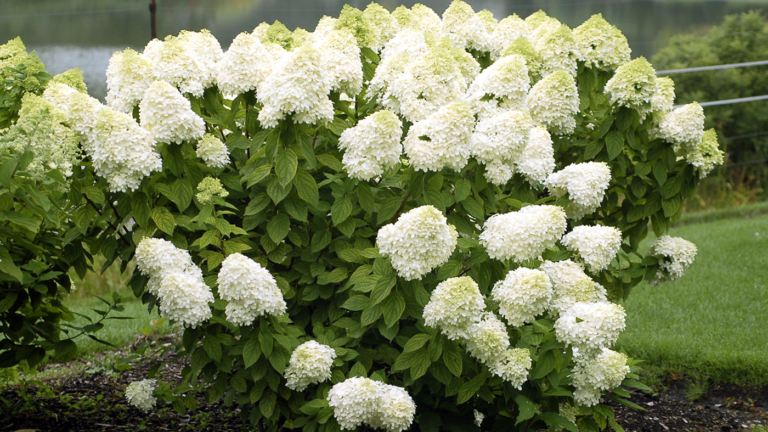
1. Prune in late winter (Feb–Mar) while plants are dormant, before growth starts.
2. Remove dead wood and any weak stems. Cut remaining stems back to an outward-facing bud or to 12–24 inches above the ground depending on desired size.
3. For a strong early season display, tip prune in spring to encourage multiple flower panicles on vigorous stems.
Smooth hydrangeas (H. arborescens, e.g., ‘Annabelle’) — blooms on new wood
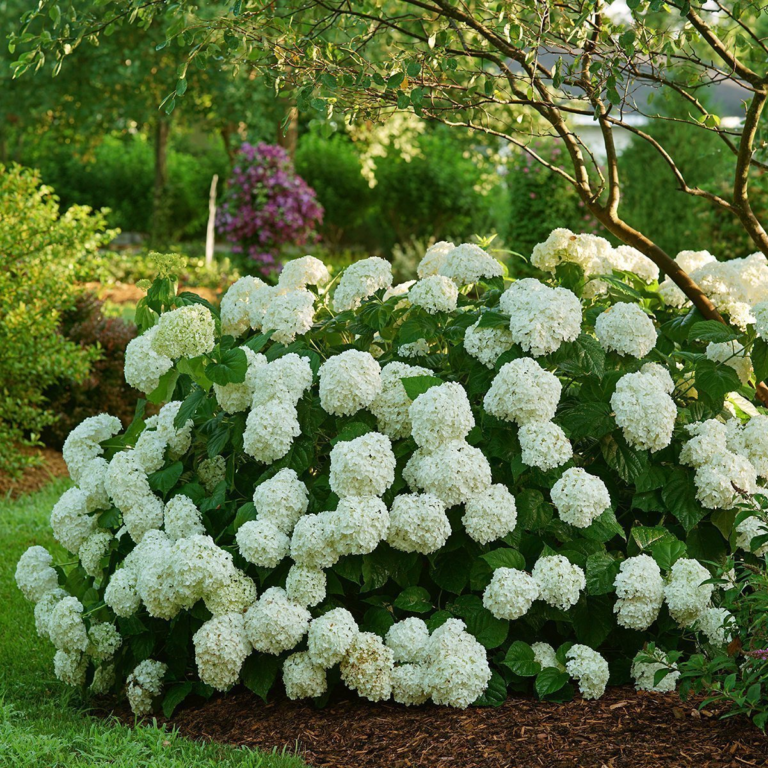
1. Prune late winter (Feb–Mar), cutting stems to 6–18 inches above the crown for large, strong blooms.
2. Alternatively, for more natural habit, cut one-third of the oldest stems to the ground each year to maintain vigor.
3. These respond well to hard pruning and are a good choice where large, reliable blooms are desired.
Oakleaf hydrangeas (H. quercifolia) — blooms on old wood
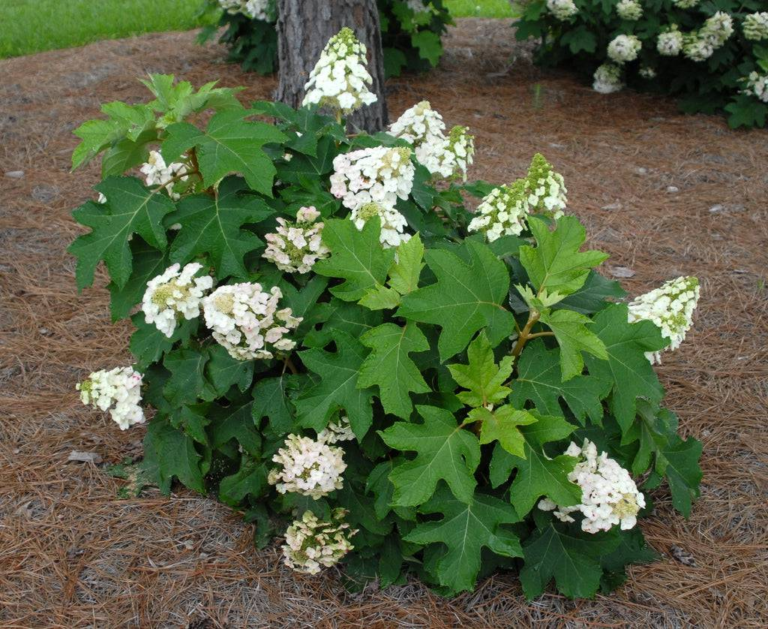
1. Deadhead and lightly shape immediately after flowering (June–July).
2. Remove dead or crossing branches, but avoid heavy late-winter pruning that will remove flower buds.
3. Oakleafs do not generally need hard pruning; preserve old wood for blooms and fall color.
General Pruning Technique and Tool Care
*Use sharp bypass pruners for small stems and a pruning saw for large wood.
*Make clean cuts at a 45-degree angle, just above a bud or lateral branch.
*Remove dead wood down to healthy tissue; if the center is congested, thin older canes at the base.
*Sanitize tools between plants if you suspect disease: wipe blades with 70% isopropyl alcohol or a 10% bleach solution, then rinse and oil.
*Dispose of heavily infested or diseased material; do not compost it.
Common Mistakes to Avoid
*Pruning bigleaf and oakleaf hydrangeas in late winter. That removes flower buds and eliminates blooms for the coming season.
*Cutting everything back hard without knowing the type. That’s safe for new-wood bloomers but disastrous for old-wood bloomers.
*Overthinning old plants. Removing too many mature canes reduces bloom production and weakens the shrub.
*Ignoring winter protection for tender stems. In exposed sites, a light mulch and leaving some stems can shelter buds.
The most reliable, least risky approach for hydrangeas in Zone 6a is to identify and prune by species. That preserves bloom reliability and plant health. Follow these rules of thumb:
*If it blooms in summer on last year’s wood (bigleaf and oakleaf), prune right after flowering—deadhead and shape—but avoid late-winter cutting.
*If it blooms on new wood (panicle and smooth), prune hard in late winter while dormant to encourage strong new growth and big summer flowers.
*If you cannot identify the plant, err on the side of caution: perform only deadheading and minor shaping after bloom and postpone any hard cuts until you can confirm the species or until you decide to replace the shrub.
Pruning hydrangeas correctly in Zone 6a is straightforward once you know the species and follow a timing plan. Identify first, prune second, and you will enjoy reliably abundant summer blooms in your Lehigh Valley garden.


