

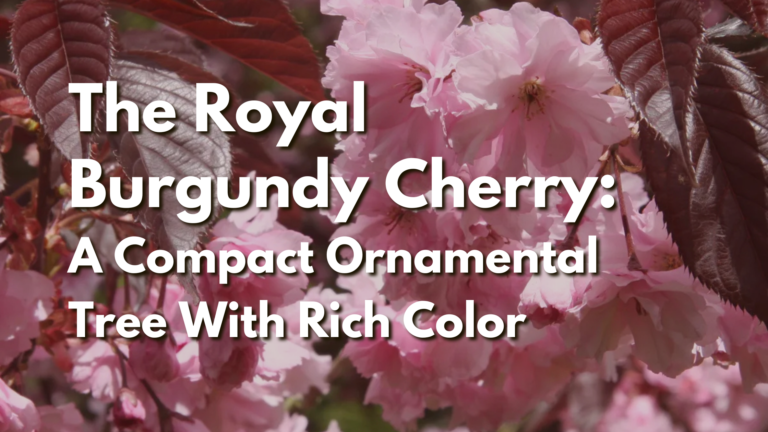
The Royal Burgundy Cherry (Prunus serrulata ‘Royal Burgundy’) is a striking ornamental tree known for its deep purple foliage and showy spring flowers. It delivers strong visual impact without the size or maintenance demands of larger flowering trees, making it a practical option for residential landscapes.
Best Growing Conditions
Royal Burgundy Cherry grows best in full sun. At least six hours of direct sunlight per day is required to maintain its rich burgundy foliage and promote heavy flowering. It prefers well-drained soil and does not tolerate consistently wet or compacted sites. While adaptable to a range of soil types, it performs best in moderately fertile soil with good drainage. Once established, it has moderate drought tolerance but benefits from supplemental watering during prolonged dry periods.
Mature Size and Growth Habit
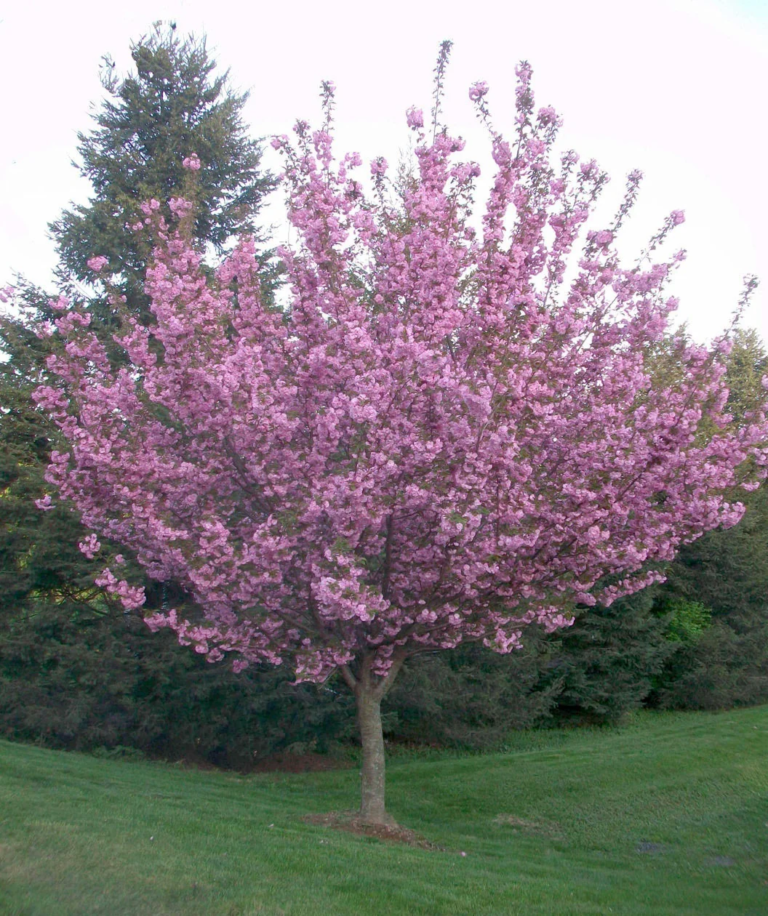
At maturity, Royal Burgundy Cherry typically reaches 15 to 25 feet in height with a spread of 12 to 20 feet. It has a rounded to slightly upright growth habit and a dense canopy. Growth rate is moderate, making it easy to manage in smaller landscapes. Its compact size allows it to fit comfortably under overhead lines and in tighter planting areas.
Flowering and Foliage
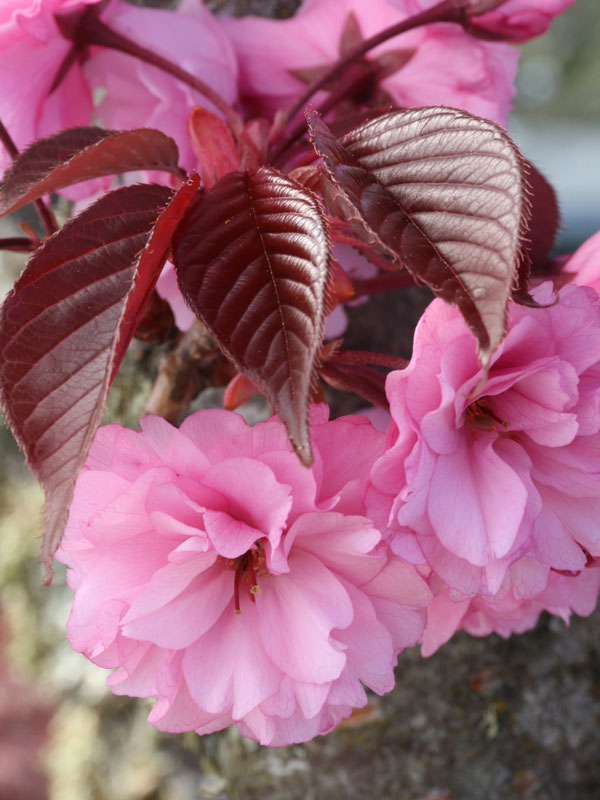
In early to mid-spring, Royal Burgundy Cherry produces abundant soft pink, double flowers that contrast sharply with its dark foliage. The foliage emerges purple in spring and retains its burgundy tone through summer before turning reddish-bronze in fall. This consistent leaf color provides season-long interest even after flowering has finished.
Landscape Uses
Royal Burgundy Cherry works well as a specimen tree in front yards or courtyards, where its color can be appreciated up close. It is also effective along walkways, patios, and driveways. In mixed ornamental plantings, it provides contrast against green-leaved shrubs and perennials. Because of its size, it is well suited for urban lots and smaller residential properties.
Care and Maintenance
Maintenance needs are moderate. Mulch around the base of the tree to conserve moisture and regulate soil temperature, keeping mulch several inches away from the trunk. Fertilization is generally unnecessary once established unless a soil test indicates nutrient deficiencies. Avoid excessive nitrogen, which can lead to soft growth and increased pest and disease pressure.
Pruning Guidelines
Prune Royal Burgundy Cherry sparingly. The best time to prune is late spring, immediately after flowering has finished. Remove dead, damaged, or crossing branches, and thin lightly to improve airflow. Avoid heavy pruning, especially in fall or winter, as this can reduce flowering and increase susceptibility to disease.
Pests and Disease Considerations
Like many ornamental cherries, Royal Burgundy Cherry can be susceptible to aphids, borers, leaf spot, and canker. Proper site selection, good drainage, and correct pruning practices significantly reduce risk. Keeping the tree healthy through consistent watering during dry periods is the most effective form of prevention.
A Strong Choice for Color and Scale
Royal Burgundy Cherry offers bold foliage color, reliable spring bloom, and a manageable mature size. For homeowners seeking an ornamental tree that delivers visual impact without overwhelming the landscape, it is a practical and attractive option.
Not sure what tree is right for you? Come visit our garden center to talk to one of our plant experts.


